
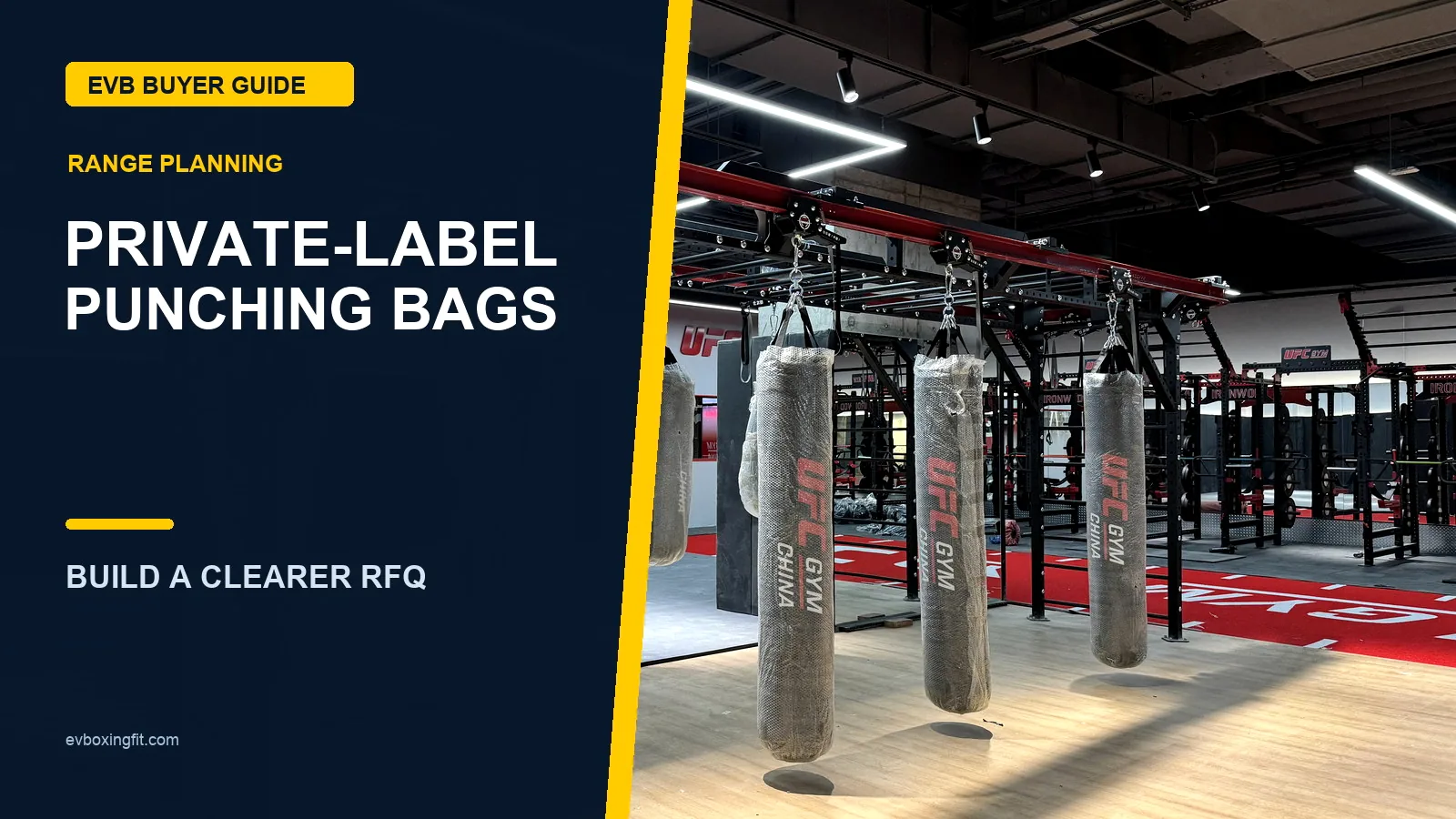
A private-label punching bag range should be built around distinct product roles, not a long list of similar shapes. Start with the customer use cases you want to serve, select a small group of clearly differentiated models, and write a separate specification and approval record for each one.
This buyer checklist is for brands, distributors, retailers and small product teams planning a bag collection. Dimensions, finished weight, filling, quantities and branding are project variables to confirm for the selected models; they are not fixed across the category.
Private-label punching bag range: planning checklist
| Decision | What to define | Common mistake |
|---|---|---|
| Range role | The customer need each model is meant to answer | Adding shapes without a clear reason to choose them |
| Product brief | Shape, dimensions, shell, filling, suspension and intended use | Using one generic specification for every bag |
| Брендирование | Artwork file, position, size, color and approval method | Approving a logo without checking it on the actual profile |
| Sample | Which details the sample must confirm | Treating a visual sample as full production approval |
| Packaging | Filled or unfilled supply, package units, marks and instructions | Discussing carton graphics before the pack method is clear |
| Launch scope | Models, variants and quantities to discuss | Launching too many untested combinations at once |
1. Give every bag a reason to exist
Begin with roles, not colors. A core heavy bag, a longer bag, a shaped target and a freestanding or wall-mounted option answer different listing and training needs. Your initial range does not need every available profile.
Use the punching bag range to compare available formats. For each shortlisted model, write one sentence explaining why a buyer would choose it instead of the next item in the collection. If the answer is only appearance, the assortment may be too repetitive.
2. Build a model-by-model specification
Each product brief should identify:
- Working product name and model reference
- Intended training use and target customer
- Requested shape and dimensions
- Shell material and surface details to confirm
- Filling plan and intended finished weight to confirm
- Seams, closures and reinforcement points to review
- Suspension, mounting or base interface
- Brand artwork and color references
- Packaging and instruction requirements
Avoid copying one set of dimensions or weight labels across different shapes. The supplier should confirm the selected model and approved construction in writing.
3. Decide how the bag will be supplied
Filled and unfilled products create different quotation, packaging and downstream-handling questions. Record the intended supply method before asking for a final quotation.
If the product will be supplied filled, confirm the filling description, finished-weight target and package information. If it will be supplied unfilled, define what instructions or labels your customer needs and who is responsible for the final filling method. Do not publish a final weight until it has been confirmed for that model.
4. Match the bag to its support system
A hanging bag is not a complete installation plan by itself. Confirm the suspension method, connection points and the supporting structure that will carry the selected model. If you also sell frames or stations, keep the bag and rack compatibility record with the product brief.
Review punching bag racks and stations separately, then document which bag and support combinations have been checked.
5. Plan branding on the actual profile
Logo placement that works on a straight bag may distort or disappear on a curved or narrow section. Approve artwork using the exact product outline or sample.
- Identify the artwork file and version.
- Mark the intended position and orientation.
- State the target size or placement area for review.
- Confirm color references and any background panel.
- Record approval separately for each model where the profile changes.
Keep permanent product marks, care information and packaging artwork as separate approval items rather than treating all branding as one file.
6. Use samples to answer specific questions
Write the sample checklist before the sample is made. That prevents the review from becoming a general reaction to appearance.
- Does the shape match the approved outline?
- Are dimensions recorded against the current specification?
- Are seams, closures and attachment points as approved?
- Does the surface and color match the agreed reference?
- Is artwork positioned correctly?
- Does the selected filling or unfilled construction match the order plan?
- Which points still need correction before production approval?
7. Keep the first range commercially clear
For an initial collection, reduce avoidable complexity. Use a controlled number of models and variants, then expand from real customer questions, sales results and quality feedback. A smaller range with clear specifications and product differences is easier to quote, photograph, explain and reorder.
Before adding another color or shape, decide whether it serves a different buyer need or only creates another inventory line.
8. Prepare a quotation brief
Ask each supplier to quote the same scope:
- Exact model list and requested variants
- Specification revision for every model
- Filled or unfilled supply basis
- Branding and artwork items
- Sample or approval steps to discuss
- Packaging method and package data to confirm
- Included, optional and excluded accessories
- Destination and commercial term
- Open questions and assumptions
What to send EVB
Send your target market, intended customer types, preferred bag formats, reference images or drawings, dimensions to discuss, filling preference, quantities, artwork files, packaging needs and any rack or suspension interface that must be matched.
Discuss your private-label punching bag brief.
Frequently asked questions
How many bag styles should a new range include?
There is no fixed number. Start with the customer needs you can explain and support, then add models only when they create a distinct role in the range.
Should I set standard weights before speaking with the supplier?
Use target requirements in the brief, but confirm the finished specification for the exact model and filling plan before publishing or ordering.
Can the same logo file be approved for every shape?
The source artwork may be shared, but position and scale should be reviewed on each different profile.
Should bags and racks be sourced as one product?
They can be discussed together, but record the bag specification, rack specification and compatibility points separately so each part remains traceable.