
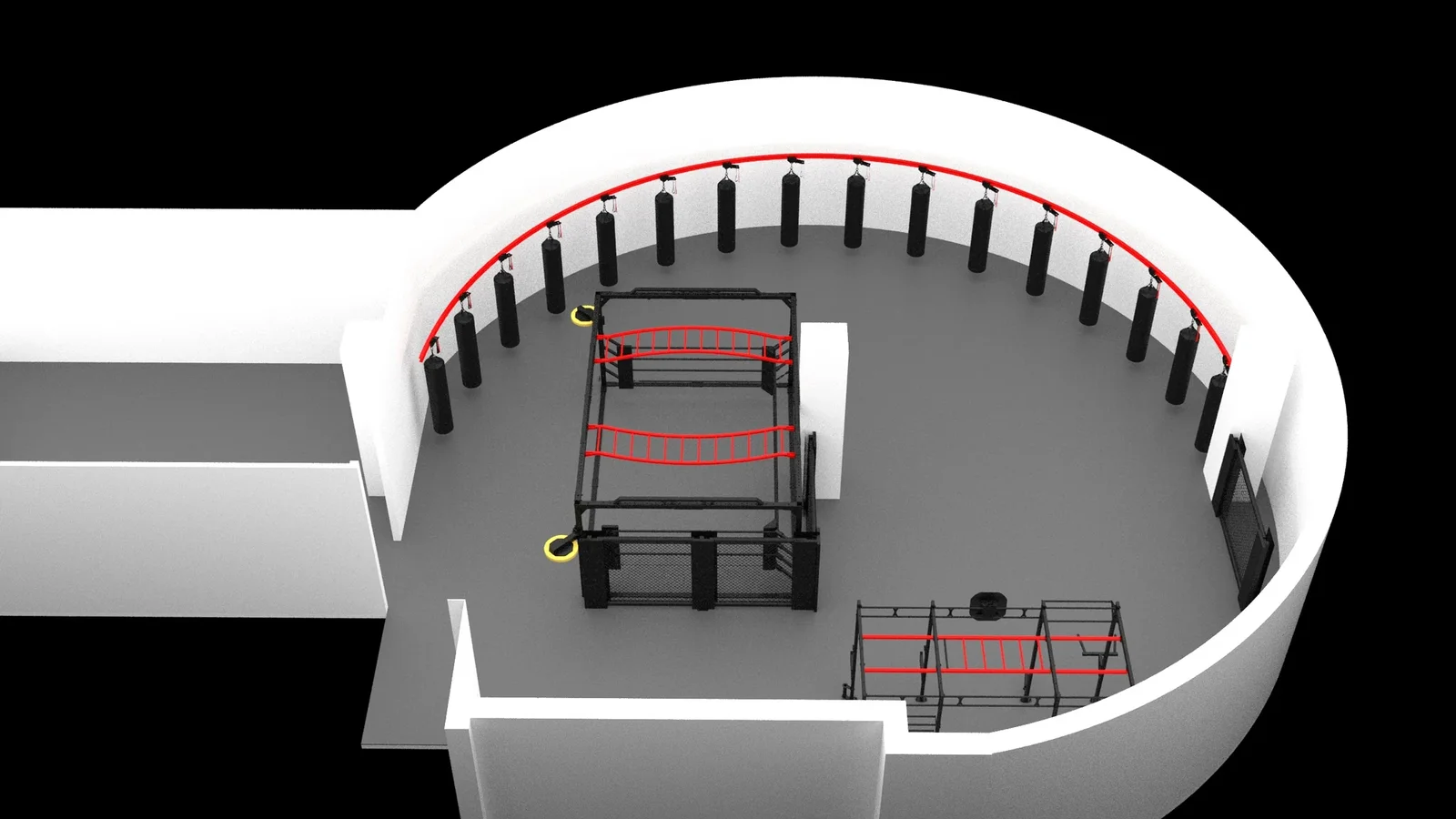
Investing in a commercial sistema di binari per sacchi da boxe transforms multi-discipline fitness studios, boxing clubs, and martial arts academies. Instead of permanently consuming valuable floor space with static bag stands or fixed ceiling brackets, an overhead track system allows coaches and operators to glide heavy bags into compact storage within seconds, converting a striking combat zone into open functional turf or mat space.
However, engineering a commercial punching bag track requires rigorous evaluation of dynamic shock loads, structural ceiling attachment methods, and bag-to-bag clearances. This planning guide outlines the mechanical and spatial standards required before finalizing equipment procurement.
1. Static Weight vs. Dynamic Impact Load Calculations
The most frequent failure in gym ceiling planning is designing support structures solely around the static dead weight of the bags:
- Static Dead Load: A commercial 150 cm leather heavy bag weighs between 45 kg and 65 kg (100–140 lbs). An array of 10 bags exerts a dead load of approximately 550 kg to 650 kg.
- Dynamic Shock Multiplication: When an athlete lands powerful combinations or heavy roundhouse kicks, kinetic pendulum momentum and torque multiply downward and torsional shear forces by 3.5x to 5.0x.
- Engineering Threshold: An overhead rail supporting 10 heavy bags must be engineered with a safety factor supporting a minimum working dynamic capacity of 2,500 kg to 3,250 kg (5,500–7,150 lbs).
Rule of thumb: Never anchor commercial rail tracks into non-structural secondary purlins, hollow architectural facades, or drywall. All anchor fasteners must interface directly with reinforced concrete joists or primary structural steel I-beams.
2. Recommended Bag Spacing & Floor Clearances
Correct spacing prevents bag collisions during high-intensity group classes and leaves sufficient clearance for lateral footwork:
| Parameter | Minimum Clearance | Recommended Commercial Standard |
|---|---|---|
| Center-to-Center Spacing | 1.8 m (6.0 ft) | 2.1 m – 2.4 m (7.0 – 8.0 ft) |
| Wall & Mirror Setback | 1.2 m (4.0 ft) | 1.5 m (5.0 ft) to prevent rebound impacts |
| Ceiling Height Requirement | 2.8 m (9.2 ft) clear height | 3.2 m – 3.8 m (10.5 – 12.5 ft) |
| Parked Storage Density | 0.35 m (1.1 ft) per trolley | Trolley nesting bumper system |
When bags glide into their parked storage location along a wall, a 20-meter training line of 10 bags condenses into under 4 meters of storage width, immediately returning over 80% of floor area to the facility.
3. Ceiling Structural Interface Types
Depending on facility architecture, EVB heavy bag track systems interface via three primary engineering methods:
A. Structural Steel I-Beam Clamping (No Drilling or Welding)
For industrial buildings and warehouse gym facilities with exposed structural steel, heavy-duty cold-formed beam clamps attach securely to the top or bottom flange of the I-beam without compromising structural building certifications.
B. Chemical Injection Anchoring into Reinforced Concrete
For commercial facilities located in multi-story concrete structures, chemical epoxy capsules or heavy-duty mechanical expansion wedge anchors transmit downward and horizontal shear forces safely into the primary slab.
C. Freestanding Overhead Truss & Goal-Post Subframes
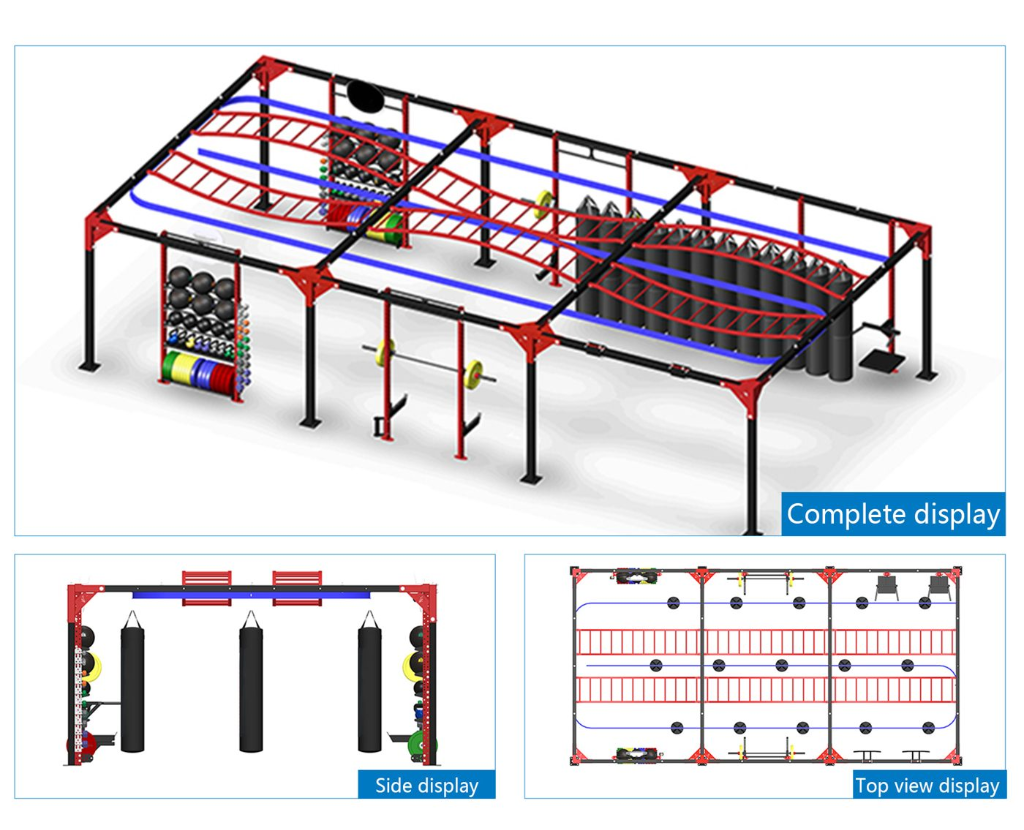
When leasing terms prohibit structural drilling, or when clear ceiling heights exceed 4.5 meters, floor-mounted heavy gauge upright posts connected by overhead cross-trusses provide a completely self-supporting track installation that does not touch the ceiling.
4. Hardware Durability: Trolleys, Rollers & Lock Mechanisms
When sourcing commercial track systems, verify the following mechanical components:
- Track Profile: Cold-formed Q235 structural steel with a minimum wall thickness of 4.0 mm, finished in industrial powder coating to resist roller friction and corrosion.
- Roller Bearings: Sealed precision ball bearings clad in high-density polyurethane (PU) wheels to suppress steel-on-steel rumble and noise during intense class sessions.
- Positive Locking Mechanism: Spring-loaded manual pull-pins or pneumatic lock brakes that securely lock each bag trolley into dedicated workout stations, preventing accidental rolling when struck.
Need a Custom Layout Assessment for Your Facility?
EVB manufactures custom heavy bag rail configurations, commercial boxing rings, and modular gym combat structures in Shenzhen, China. Contact our engineering team with your architectural drawings (CAD/PDF) or facility ceiling photos to receive a complimentary 3D layout simulation and engineering load quote.